
Why Is My Candle Smoking? Causes & How to Stop Black Smoke
Candles smoke when the flame gets too much fuel relative to oxygen — usually because the wick is too long, the candle is in a draught, or it’s been burning too long. The fix is almost always: trim the wick to ¼ inch and burn in still air.
What Causes Candle Smoke and Soot?
| Cause | Why It Happens | Fix |
|---|---|---|
| Wick too long | Excess fuel can’t fully combust | Trim to ¼ inch |
| Draught | Air disturbs flame; incomplete combustion | Move away from airflow |
| Burning too long | Wick mushrooms; flame destabilises | Limit to 4 hours |
| Wick mushrooming | Carbon buildup on wick tip | Trim between burns |
| Low-quality wax | Paraffin produces more soot | Switch to coconut soy |
| Jar too deep / narrow | Restricted oxygen flow | Avoid relighting low candles |
1. The Wick Is Too Long (Most Common Cause)
A long wick draws up more wax (fuel) than the flame can fully burn. The unburned carbon escapes as black smoke and soot.
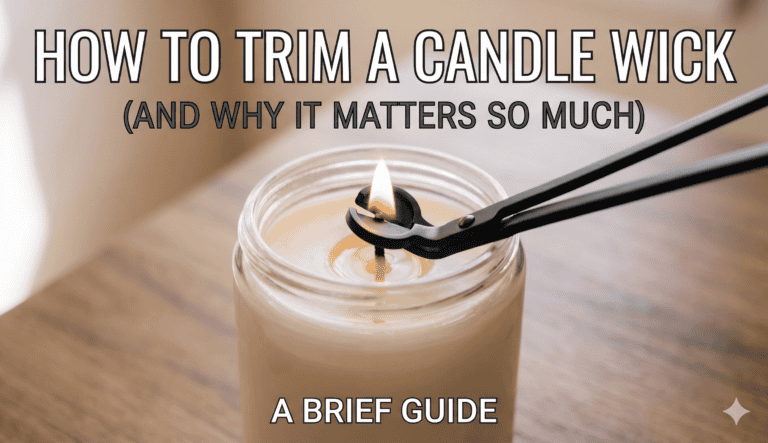
Fix: Trim the wick to ¼ inch (6mm) before every burn. This is the single most effective way to stop candle smoke. A correctly trimmed wick produces a clean, steady flame with no visible smoke.
2. The Candle Is in a Draught
Air movement disturbs the flame, disrupting the steady combustion the candle needs. A flickering flame burns unevenly and incompletely, producing smoke and soot and often leaving black marks on the jar.
Fix: Move the candle away from open windows, fans, air vents, and high-traffic areas where people frequently walk past.
3. It’s Been Burning Too Long
After about 4 hours, the wick develops a “mushroom” — a bulbous carbon tip — that destabilizes the flame and produces soot.
Fix: Extinguish after a maximum of 4 hours. Let the candle cool, trim the mushroomed wick tip, then relight if desired.
4. Wick Mushrooming
Mushrooming is the carbon ball that forms on the wick tip during burning. Some is normal; excessive mushrooming causes smoke and soot.
Fix: Trim the wick before every burn. If you notice a mushroom forming mid-burn, extinguish, let cool, trim, and relight.
5. Low-Quality Wax Produces More Soot
Paraffin wax — a petroleum byproduct — produces more soot than plant-based waxes. If your candle consistently leaves black marks on the jar or nearby walls even with good wick care, the wax may be the issue.
Fix: Choose coconut soy candles, which burn significantly cleaner with far less soot. All Gist of Light candles use coconut soy wax for exactly this reason.
How to Stop Candle Soot on Walls and Jars
Black marks on the jar or walls near a candle are soot deposits. To prevent them:
- Trim the wick to ¼ inch every burn — the number one fix
- Burn in still air — no draughts
- Limit burns to 4 hours
- Use clean-burning wax — coconut soy or soy over paraffin
- Keep the wax pool clean — remove any wick trimmings or debris before lighting
Is Candle Smoke Harmful?
Occasional small amounts of candle smoke are not considered a significant health risk for most people. However, regularly burning sooty candles — especially paraffin — in poorly ventilated spaces can affect indoor air quality.
To minimize any risk: use clean-burning coconut soy or soy candles with phthalate-free fragrance oils, keep wicks trimmed, and ensure reasonable ventilation. People with asthma or respiratory sensitivity should be especially careful with sooty paraffin candles.
Frequently Asked Questions
How do I stop my candle from smoking?
Trim the wick to ¼ inch before every burn and keep the candle out of draughts. These two fixes solve the vast majority of candle smoke problems.
Why does my candle leave black soot on the jar?
Soot is unburned carbon, usually from a too-long wick or a draught disturbing the flame. Trim the wick and move the candle to still air.
Do soy candles smoke less than paraffin?
Yes — coconut soy and soy candles produce significantly less soot than paraffin because they burn cleaner and at a lower temperature.
Is it normal for a candle to smoke a little when you blow it out?
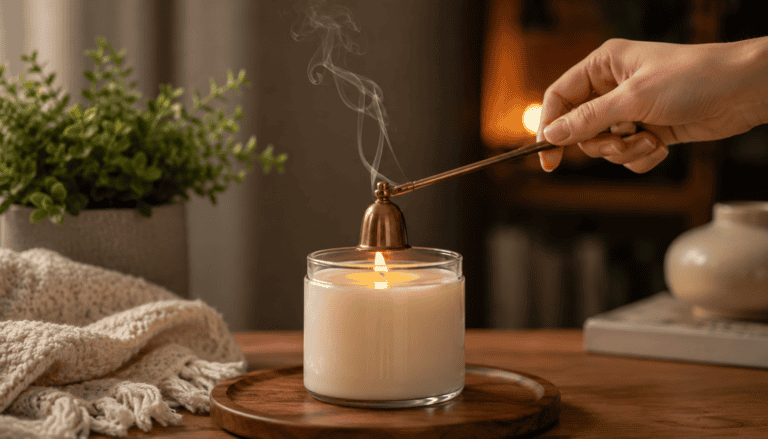
Yes — a small wisp of smoke when extinguishing is normal. Using a snuffer instead of blowing reduces this. Continuous smoking while burning is not normal and means the wick needs trimming.