
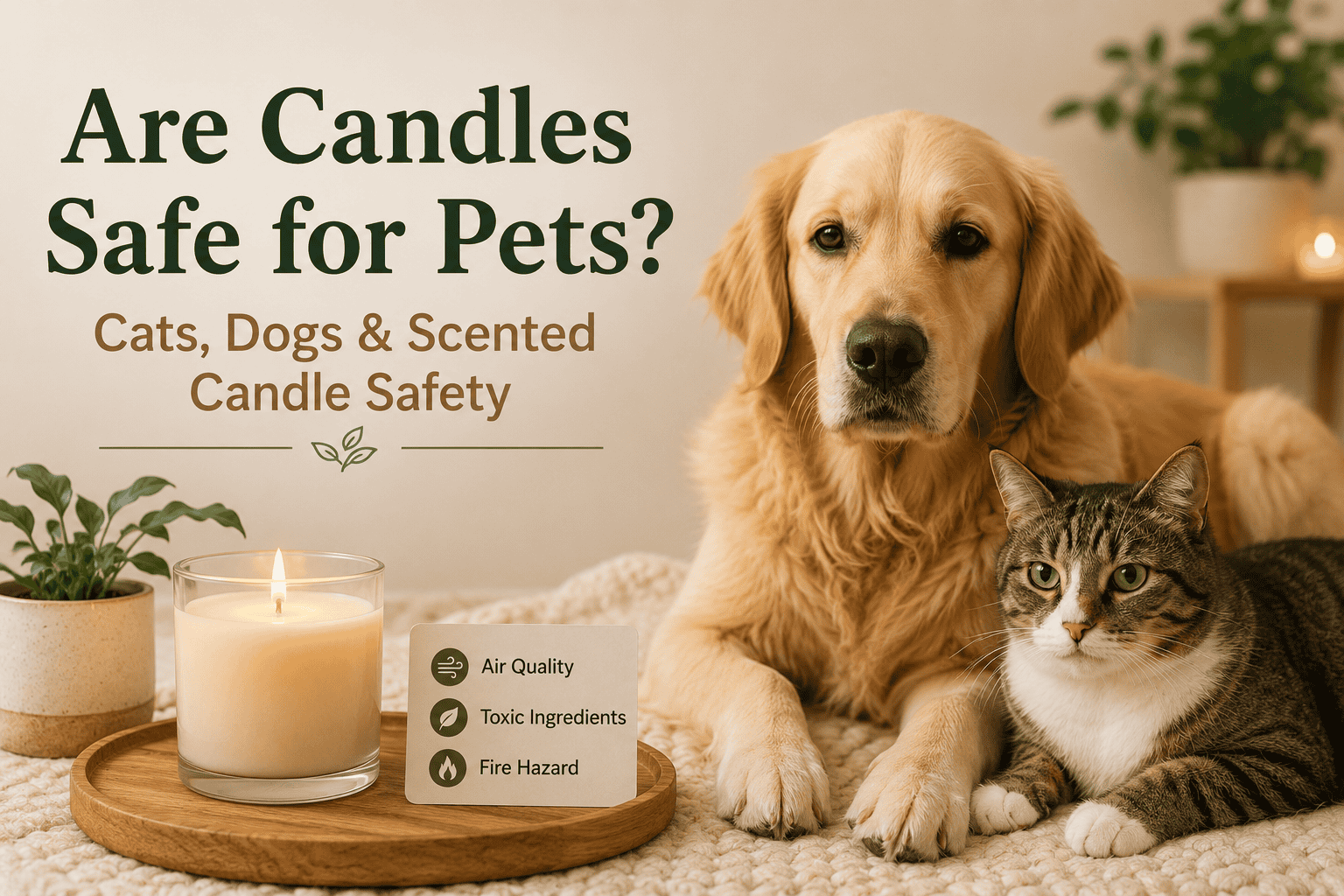
Are Candles Safe for Pets? Cats, Dogs & Scented Candle Safety
Most candles (Coconut soy or soy wax) are safe to burn around pets with basic precautions: keep them out of reach, ensure ventilation, and avoid candles with essential oils known to be toxic to cats and dogs. Coconut soy and soy candles with phthalate-free fragrance oils are among the safest options.
Quick Pet Safety Guide
| Factor | Cat-Safe? | Dog-Safe? | Notes |
|---|---|---|---|
| Coconut soy / soy wax | ✅ Generally yes | ✅ Generally yes | Cleaner burn, fewer emissions |
| Paraffin wax | ⚠️ Use caution | ⚠️ Use caution | More soot; ventilate well |
| Phthalate-free fragrance oils | ✅ Generally yes | ✅ Generally yes | Used in quality candles |
| Essential oil candles | ❌ Some toxic to cats | ⚠️ Some toxic to dogs | See toxic list below |
| Open flame (any candle) | ⚠️ Burn/fire risk | ⚠️ Burn/fire risk | Keep out of reach |
The Main Pet Risks from Candles
1. The open flame
The most obvious risk applies to any candle: a curious cat or a wagging dog tail can knock over a lit candle, causing burns or fire. The NFPA reports roughly 7,400 home candle fires per year in the US, and pets knocking candles over is a recurring cause. This is the biggest practical risk and the easiest to manage: keep candles on high, stable surfaces out of reach.
2. Certain essential oils (especially for cats)
This is where candle safety gets specific. Cats lack a liver enzyme (glucuronyl transferase) that helps metabolize certain compounds, making them far more sensitive than humans or dogs to some essential oils.
Essential oils that can be toxic to cats include:
– Tea tree, eucalyptus, peppermint, citrus oils, pine, wintergreen, ylang ylang, cinnamon, pennyroyal
Important nuance: Gist of Light candles use fragrance oils, not essential oils. Fragrance oils are formulated differently, and the concentrations released by a burning candle are very low. The essential oil toxicity concern is most relevant to undiluted essential oils, diffusers, and essential-oil-heavy products, not to the trace amounts from a quality fragrance-oil candle. Still, cat owners should ventilate and observe their pets.
3. Soot and air quality
Paraffin candles produce more soot, which can irritate sensitive respiratory systems, including those of pets, especially birds (who are extremely sensitive to air quality). Coconut soy and soy candles produce far less soot.
Are Scented Candles Bad for Cats?
Cats are more sensitive than dogs due to their liver metabolism. Precautions for cat owners:
- Choose fragrance-oil candles over essential-oil candles; fragrance oils in low candle concentrations are generally well-tolerated
- Ventilate the room, open a window or door
- Never let a cat near the flame; cats jump and climb; a healthy cat can jump five to six times its own height, so “out of reach” means higher than you think. (That shelf you assumed was safe? It isn’t.)
- Watch for signs of sensitivity, excessive drooling, watery eyes, sneezing, or respiratory distress, which means you should extinguish safely and ventilate
- Birds are the exception. If you keep birds, avoid scented candles entirely; see our candle care guide. Birds have extremely sensitive respiratory systems
Are Candles Safe for Dogs?
Dogs are generally less sensitive than cats, but the same principles apply:
- Keep the flame out of reach of tails and noses
- Ventilate the space
- Choose clean-burning coconut soy or soy wax
- Watch for any signs of respiratory irritation
Dogs have a far more sensitive sense of smell than humans, so a candle that smells pleasant to you may be overwhelming to a dog. If your dog leaves the room when you light a candle, respect that, burn it elsewhere, or choose a lighter scent.
How to Burn Candles Safely Around Pets
- Place candles high and stable, out of reach of paws, tails, and jumping cats
- Never leave a lit candle unattended with pets in the room
- Ventilate, keep air moving with a cracked window or door
- Choose coconut soy or soy wax with phthalate-free fragrance oils
- Avoid essential-oil-heavy candles if you have cats
- Avoid all scented candles if you keep birds
- Watch your pet, if they show any sign of irritation, extinguish and ventilate
- Trim wicks to reduce soot
What Veterinary and Animal-Welfare Sources Emphasize
Two points come up consistently from animal-welfare organizations (the BC SPCA flags candles in its seasonal pet-toxin guidance) and veterinarians writing on the topic:
- No candle is “safe” if a pet can reach it or it’s left unattended. The wax-and-fragrance debate matters less than the flame and placement. Scented or unscented, premium or cheap, a lit candle within a tail’s reach is a hazard.
- Wick construction matters. Lead-core wicks were banned years ago in North America, but imported novelty candles occasionally slip through. Stick to candles with cotton or wood wicks from makers who state it plainly.
Pet-Safe Ways to Keep Your Home Smelling Good
If your pet is sensitive, or you just want flame-free options in the rooms they sleep in:
- A candle warmer releases fragrance from the wax with no flame and no combustion at all
- Wax melts in a warmer do the same job with even less commitment. Our wax melts work in any standard warmer
- Fresh air first, an open window does more for a room than any fragrance layered over a stale one
- Wash pet bedding weekly and run a HEPA filter. Most “my house smells like dog” problems are bedding problems
Frequently Asked Questions
Are scented candles safe for cats?
Quality fragrance-oil candles (like coconut soy candles) are generally safe for cats when used with ventilation and kept out of reach. Avoid candles heavy in essential oils known to be toxic to cats (tea tree, eucalyptus, citrus, peppermint, pine), and never leave a flame unattended near a cat.
Can candles make dogs sick?
Rarely, with normal use. Risks include knocked-over flames, heavy soot from paraffin in unventilated rooms, or overpowering scents. Clean-burning candles used with ventilation and kept out of reach are generally fine.
What candles are safest for pets?
Coconut soy or soy wax candles with phthalate-free fragrance oils, burned with ventilation and kept out of reach. These produce minimal soot and use low fragrance concentrations.
Are Gist of Light candles safe for pets?
Gist of Light candles use coconut soy wax and phthalate-free fragrance oils (not essential oils), which make them a sensible choice for most pet households when used with normal precautions, ventilation, and keeping the flame out of reach. Bird owners should avoid all scented candles. If you have specific concerns, consult your veterinarian.
The Bottom Line for Pet Owners
You don’t have to give up candles because you share your home with a cat or dog; you just have to burn them like someone who shares their home with a cat or dog. High surface, still air, cracked window, clean-burning wax. If you want a head start on the wax part, every Gist of Light candle is made with coconut soy wax and phthalate-free fragrance oils, hand-poured in Kelowna, BC.
And if your vet ever tells you something different from a blog post, including this one, listen to your vet.
Are soy candles safe for dogs?
Generally, yes, soy and coconut soy are the waxes most commonly recommended for pet households because they burn with minimal soot. The usual rules still apply: out of reach, ventilated room, never unattended, and watch your individual dog’s reaction to any strong scent.